Home/ Team

Rafael Sattarov

Author Posts

Why Turkey Is Militarizing Northern Cyprus While Its Recognition Drive Stalls
Why Turkey Is Militarizing Northern Cyprus While Its Recognition Drive Stalls
September

22

2026

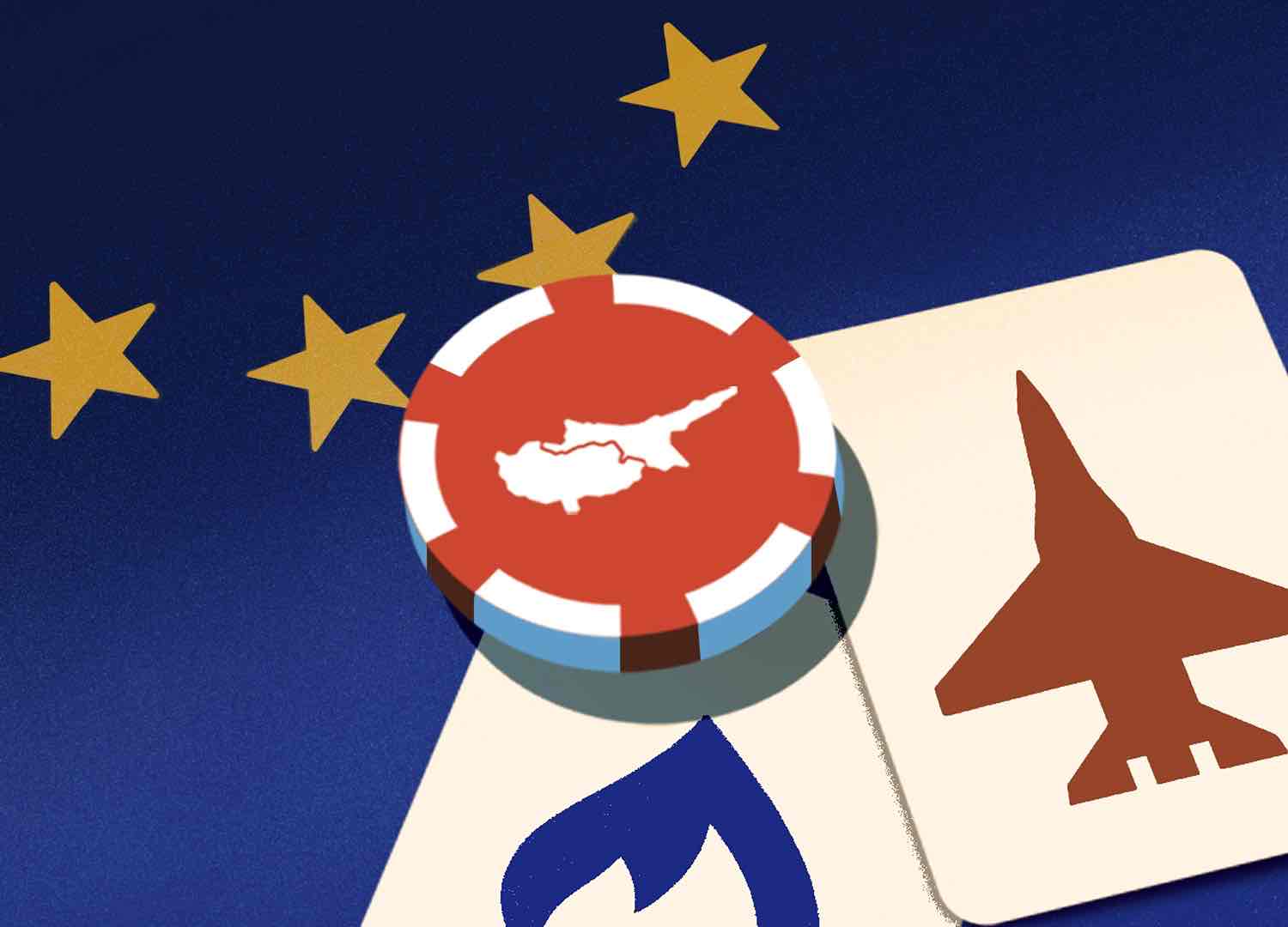
Illustration by Dinmukhamed Kairulla.

Turkey treats Northern Cyprus as an asset inside a larger bargaining space, and two separate campaigns now run on it. The first is diplomatic: a sustained effort to accumulate international standing for the Turkish Republic of Northern Cyprus (TRNC) through culturally aligned partners, above all the Organization of Turkic States (OTS), which has met a firm wall in Central Asia. The second is military: a steady reinforcement of the northern third of the island that began with armed drones in 2019 and reached manned combat aircraft in March 2026, driven by the contest over Eastern Mediterranean gas and, increasingly, by Turkey's deteriorating relations with Israel and Greece.

Neither campaign explains the other. The Central Asian refusal rests on calculations that have nothing to do with Turkish force posture, and the build-up answers an Israeli-Greek-European security architecture rather than a diplomatic setback in Samarkand. What they share is an effect on the states Ankara has invited to endorse its position. Recognizing the TRNC in 2019 meant endorsing a disputed entity and accepting friction with Brussels. Recognizing it now means conferring sovereign standing on territory that hosts roughly 35,000 Turkish troops, armed drones and Turkish F-16s, at a moment when Turkey's relationship with Israel is the worst it has ever been and the Republic of Cyprus functions as a forward base for European and Israeli defense cooperation. The request has moved out of the symbolic register and into the military one, and Astana, Tashkent and Ashgabat have correspondingly less reason to entertain it.

Intra-Alliance Opposition as Method

In Turkey-West Relations: The Politics of Intra-Alliance Opposition, Oya Dursun-Özkanca supplies the most serviceable framework for reading Turkish behavior. Her argument is that despite recurring quarrels with Washington, Brussels, and individual European capitals, Ankara has no intention of leaving the Western alliance network. It practices intra-alliance opposition instead, working to redefine the rules of engagement inside NATO to widen its own room for maneuver.

She distinguishes three modes along that spectrum. Boundary testing probes the limits of acceptable conduct without forcing a break. Boundary challenging contests partner policies outright and converts obstruction into bargaining power. Boundary breaking takes unilateral action that undermines alliance norms directly; the purchase of the Russian S-400 system remains the textbook case.

The framework dissolves the apparent contradictions in Turkish conduct. Ankara can fight with Paris over Libya, Syria, and the Eastern Mediterranean, buy Russian air defense, obstruct NATO enlargement, and then reopen talks with France and Italy on European air defense while signaling interest in repairing relations with the EU. Turkey is not changing camps; it is calibrating its price inside the same structural space it has occupied since 1952.

Strategic Recalibration and Domestic Realities

Ankara's thaw with Paris reads differently when set against its setbacks over Northern Cyprus. The push to raise the TRNC's profile through the OTS met an institutional wall: Central Asian governments declined to subordinate their own foundational commitments to territorial integrity and the inviolability of recognized borders to the claims of Turkic solidarity. Ankara adjusted its methods without touching the objective, and the confrontational rhetoric toward France that once dominated coverage of the Eastern Mediterranean gave way to something quieter.

The domestic record from the same period shows how little that shift implies about Turkey's internal trajectory. On July 5-6, 2026, ahead of the NATO summit in Ankara, Turkish authorities detained journalists, human rights lawyers, academics, and civic activists in raids across multiple provinces, hitting left-leaning organizations in particular. Those held included Buse Söğütlü, foreign news editor at Gazete Duvar; Ceren Erdoğdu, an editor at OdaTV; and Ezgi Önalan, head of the Istanbul branch of the Progressive Lawyers Association (ÇHD). Officials cited an investigation into the youth wing of the far-left THKP/C; press freedom organizations read the timing as a clearing of the field before a high-profile international gathering. Foreign policy normalization with the West has never required political liberalization at home, and Ankara has had no trouble discussing joint missile defense with Paris while narrowing political space in Istanbul.

The Cyprus Puzzle

Greece and Turkey entered the Cold War as partners. Both joined NATO in 1952, both absorbed American assistance under the Truman Doctrine, and King Paul's state visit to Ankara that year was staged as a deliberate closing of the Asia Minor file. Cyprus reopened it.

By the mid-1950s, Enosis, or union of the island with Greece, commanded broad support among Greek Cypriots and provoked corresponding resistance from the Turkish minority, which stood to fall from co-founding community to protected remnant inside a greater Greek state. The dispute moved to the mainland quickly. After a 1955 bomb blast near the Turkish consulate in Thessaloniki, adjacent to Atatürk's birthplace, anti-Greek pogroms swept Istanbul; later research established that the riots were organized by nationalist networks and security service operatives rather than spontaneous.

The 1960 settlement produced an independent Republic of Cyprus with a power-sharing constitution: a Greek Cypriot president, a Turkish Cypriot vice president, guaranteed Turkish Cypriot representation in state institutions, and Britain, Greece and Turkey as guarantor powers. The formula itself was unremarkable; Lebanon operated on a comparable confessional balance, and it failed for want of mutual trust rather than for want of design. Turkish Cypriots were attacked, pushed into enclaves and squeezed out of public administration, and both communities formed paramilitaries. Partition was still not inevitable.

Athens made it so. The colonels who seized power in April 1967 governed on anti-communism and a claim to technocratic competence, and by 1973 both had run out. Inflation, the oil shock, and the crushing of the Athens Polytechnic uprising left the regime dependent on naked force, and an internal coup that November installed Brigadier General Dimitrios Ioannidis, head of the military police, who needed a nationalist success to consolidate his position. In July 1974, Athens backed a coup on the island that removed President Archbishop Makarios III and installed Nikos Sampson, an ultranationalist committed to immediate union with Greece.

The coup destroyed the 1960 constitutional order and threatened the Turkish Cypriot community directly. On July 20, Turkey intervened under the name Operation Attila and established control over roughly the northern third of the island in two phases, triggering population transfers in both directions. For Cypriots, the partition was a human catastrophe. For the junta it was fatal; the regime collapsed within days.

That sequence is why comparisons between 1974 and Russia's 2014 annexation of Crimea are misleading. The Turkish intervention followed an Athens-sponsored coup designed to alter the island's international status by force. This settles none of the legal questions attached to Turkey's continued military presence, to property claims, or to the 1983 unilateral declaration of the TRNC, which Ankara alone recognizes. It does mean that any account of the partition that omits the junta, the coup against Makarios and the drive for Enosis describes an effect without its cause.

Two claims hold at once, and the Cyprus debate usually forces a choice between them. The annexationist project of the Greek colonels does not license what Ankara has built on the island in the fifty years since. The crimes of the junta do not license Turkey's present ambitions in the Eastern Mediterranean either, particularly its claims over the gas discovered there.

The last serious attempt at resolution was the 2004 Annan Plan, which proposed a bizonal federal state. Turkish Cypriots approved it in a referendum; Greek Cypriots rejected it overwhelmingly. Days later, the Republic of Cyprus entered the European Union as a divided island. Brussels had granted membership without conditioning it on a settlement, and once accession was complete, its leverage over both communities largely evaporated, an argument Ankara has made ever since, and one that is difficult to refute.

“Drill, Baby, Drill”

The discovery of major gas fields in the Levant Basin changed the political economy of the conflict. Offshore finds in Israeli, Egyptian and Cypriot waters turned abstract maritime boundary disputes into a contest over concrete financial assets. The pull of those assets is formidable: Israel and Lebanon, formally hostile for decades, managed a maritime boundary agreement to enable drilling. Azerbaijan entered the same play through SOCAR's expanding stakes in Israeli energy assets.

Turkey found itself increasingly isolated. Ankara rejects the existing Exclusive Economic Zone demarcations, arguing that they compress its continental shelf unfairly and disregard the sovereign rights of Turkish Cypriots. Turkish seismic vessels and drill ships, escorted by naval assets, have repeatedly produced standoffs with Greece and the Republic of Cyprus.

The status of Northern Cyprus is therefore a question of resource access rather than historical legacy. Even limited international recognition would give the TRNC legal standing to sign commercial agreements, attract foreign investment, issue exploration licenses and build a regulatory framework over the waters off the island's northern and eastern coasts. A de facto shift by even a handful of states would allow Turkish energy companies to present their offshore operations as partnerships with a sovereign actor rather than as activity in occupied territory. That is the substance of Erdoğan's localized “drill, baby, drill” doctrine: transit routes, infrastructure and commercial claims, secured through legal standing that Ankara cannot manufacture on its own.

The Garrison and the Gas Field

Turkey's military position on the island has grown in step with those claims, and the two files were fused from the start. When the first Bayraktar TB2 landed at Geçitkale in December 2019, the first Turkish military aircraft deployment to that airfield since the early 2000s, Turkish and Turkish Cypriot officials described the mission plainly as protection for Turkish drilling and seismic vessels operating in contested waters. The description was accurate. Armed drones extend the range at which a contested legal claim becomes enforceable, which is a different mission from defending Turkish Cypriots against a Greek Cypriot National Guard that has not attacked them in half a century.

The garrison is the largest standing fact on the island. Roughly 35,000 Turkish soldiers are stationed in the north, equivalent to about a tenth of the population there, among the densest concentrations of foreign forces anywhere in the world, sustained without interruption for five decades. Turkish media has reported on plans to boost that number to 100,000. Ankara has also used the promise of further construction as an instrument in its own right. A naval base in the north was announced in December 2019, quietly shelved by 2023, and revived rhetorically by Erdoğan in July 2024 as something Turkey stood ready to build “if necessary”. The base has never been built. Its value lies in the announcement.

What changed in 2026 is the character of the deployment. On March 9, Turkey moved six F-16C fighters to Ercan, west of Nicosia, describing the step as part of “a phased approach to enhancing security in light of recent developments in the region” and warning that further measures might follow. Manned combat aircraft convert a static occupation force into a platform with reach across the eastern basin, and they place Israeli naval vessels, energy platforms and air corridors within closer operational range. The aircraft reached Turkey through American foreign military sales, a fact Washington has so far declined to address.

The immediate trigger came from outside the Cyprus dispute. Iranian-made drones launched from Lebanon struck RAF Akrotiri on the island's southern coast shortly after midnight on March 3, damaging a hangar, with two more intercepted. Within days, Greece had sent four F-16s and two frigates under the Greek-Cypriot Unified Defence Doctrine, France a frigate along with land-based counter-drone and counter-missile systems, and Germany and the United Kingdom warships of their own. President Nikos Christodoulides presented the response as a template for EU crisis management. Turkey's fighters arrived six days after that. An island 240 kilometers long now hosts two military build-ups facing each other across the Green Line, each describing itself as defensive.

The alignment Ankara now faces is what distinguishes this from the standoffs of the past decade. In late December 2025, senior officers from Israel, Greece and Cyprus signed a trilateral work plan covering joint air and naval exercises, combined working groups, strategic military dialogue and Israeli intelligence transfer. Greece is buying Israeli air and missile defense at a scale that shifts the Aegean balance, including 36 PULS rocket artillery systems and a layered “Achilles Shield” program estimated at three billion euros; Cyprus is acquiring Israeli systems of its own. Retired Admiral Cem Gürdeniz, the intellectual author of the Blue Homeland concept, described the mechanism as an attempt at “indirect containment” designed to exclude and encircle Turkey.

Ankara has answered in public and at scale. The Blue Homeland 2026 exercise in April deployed 120 vessels, 50 aircraft and 15,000 personnel simultaneously across the Black Sea, the Aegean and the Eastern Mediterranean. On August 3, Defense Minister Yaşar Güler announced that Turkey was reviewing its military posture in the north in response to deepening security cooperation among the United States, Israel, Greece and the Republic of Cyprus, while taking care “to preserve the sensitive balances on the island.” A week later, in a written answer to a CHP parliamentarian, his ministry confirmed that studies covering “possible crisis, tension and war” in the region were proceeding in coordination with all organs of the state, and identified Israeli-Greek defense cooperation as a subject of close attention.

Contingency planning is what defense ministries do, and the letter is weak evidence of intent. The change in posture it describes is real nonetheless. Turkish forces in Northern Cyprus spent fifty years arrayed against a Greek Cypriot National Guard. They now sit inside an Israeli-Greek-European security architecture that did not exist in 2019, and their function has changed accordingly, from holding a ceasefire line to holding a stake in the Eastern Mediterranean.

That change raises the price of the recognition campaign for everyone Ankara has invited to join it. Recognition of the TRNC now carries the weight of a position in an active military confrontation, which no Central Asian capital has an interest in taking.

The Central Asian Reality Check

The energy calculus explains Ankara's push to elevate Northern Cyprus through the OTS. The logic was pragmatic: if recognition could not be obtained at the UN or in European institutions, incremental legitimacy could be accumulated through culturally aligned partners. Ersin Tatar, then the Turkish Cypriot leader, began appearing at high-level OTS gatherings with backing from Ankara and Baku.

Tatar's appearance at the OTS summit in Samarkand created friction. According to sources close to the Uzbek administration, Tashkent had not been briefed adequately on the protocol format of his participation, and the summit's post-event arrangements were adjusted accordingly, including the absence of a formal send-off for the Turkish delegation. Those protocol details rest on private accounts; the geopolitical outcome does not. At the subsequent EU-Central Asia summit in Samarkand, regional leaders restated their commitment to international law, national sovereignty, territorial integrity and the relevant UN Security Council resolutions.

The Turkistan summit in May 2026 made the boundaries explicit. President Kassym-Jomart Tokayev told the assembled leaders that the OTS is “neither a geopolitical project nor a military organization,” rejecting the proposition that it might develop into an alliance, and countered Erdoğan's proposal for a unified Turkic alphabet and language model with a narrower offer of a shared terminological database. Turkmenistan and Hungary sent no delegations. Tufan Erhürman attended as an observer, and the other participants left his presence out of their official statements: the same silent non-endorsement Tatar received, now applied to a leader with the opposite mandate.

Elements of the Turkish press attributed Central Asia's posture to European economic inducements, but Brussels' interest in the region extends well beyond Cyprus. Europe is engaging Central Asia to prevent it from becoming an exclusive condominium of Moscow and Beijing, a modern echo of the 1907 Anglo-Russian entente over Persia. French diplomatic channels did track Ankara's and Baku's maneuvers over Northern Cyprus closely, and the issue featured in European-Central Asian consultations, particularly in the intensified bilateral contacts between Paris and Tashkent.

The decisive constraint, however, was never European. Neither Uzbekistan, Kazakhstan nor Turkmenistan had ever committed to recognizing Northern Cyprus. Their foreign ministries have held a consistent line for years: international disputes are to be settled peacefully based on the UN Charter, territorial integrity, and the inviolability of recognized borders. That position is anchored in their own security calculations, above all regarding Ukraine. Moscow has pressed its regional partners for several years to validate its territorial claims there, and both Astana and Tashkent have refused; Tokayev restated Kazakhstan's opposition to recognizing breakaway territories on a public panel alongside Vladimir Putin.

Recognizing Northern Cyprus would collapse that position. No Central Asian government can reject Moscow's claims over Crimea on territorial-integrity grounds while recognizing the TRNC out of Turkic solidarity. Holding a single principle-based standard serves their core interests, and for Uzbekistan and Kazakhstan the primary strategic vector remains intra-regional stability rather than a bloc under Ankara's direction. The OTS continues to develop as a useful platform, but summits, joint declarations, and photo opportunities are not a common foreign policy, and Turkey's economic weight in the region remains secondary to the combined presence of China, Russia, and the EU.

The Post-Soviet Paradox: Financial Geography, Karabakh, and Baku's Dilemma

Why did the Central Asian states and Azerbaijan decline to take a clear position on Cyprus in the first place, and refrain from openly backing Turkey?

Turkey itself remained Euro-centric until the mid-2000s, assuming that EU membership was a matter of time. Even the AKP, despite its Islamist origins, initially treated accession as central to Turkish national interest and pursued the reform process vigorously. Within that climate, Ankara framed Cyprus as a bilateral question with Brussels rather than as a pan-Turkic cause requiring mobilization across Eurasia, and made little sustained effort to press the newly independent Central Asian republics toward recognition.

Azerbaijan could not align with Ankara on Cyprus either, notwithstanding the “one nation, two states” doctrine. Baku was locked in a territorial conflict with Armenia over Karabakh and the surrounding districts, and its entire diplomatic case rested on territorial integrity and the inviolability of internationally recognized borders. Recognizing a breakaway entity created by foreign military intervention would have destroyed that case.

The political economy of the post-Soviet space was also being transformed. As private capital accumulated and international financial integration expanded, accompanied by the patronage networks and blurred boundaries between state power and business characteristic of the period, a class of wealthy officials, oligarchs, and politically connected elites emerged across Central Asia and Azerbaijan. For these actors, Europe became a tangible destination for capital preservation, real estate, elite education, and second citizenship rather than an abstract foreign policy vector.

That dynamic produced a structural paradox in the Cyprus file. For post-Soviet elites, Cyprus was not a remote Mediterranean dispute but a node in their own financial geography. The Republic of Cyprus served as a preferred jurisdiction for corporate structuring, capital flight and property investment, and for a period as a gateway to EU citizenship through its golden passport scheme; investigative reporting, notably The Cyprus Papers, documented politically exposed persons and business figures from Kazakhstan and the wider region acquiring Cypriot nationality. Establishing precise numbers is difficult given opaque property registries, but the broader picture is unambiguous: for influential segments of the post-Soviet elite, the internationally recognized Republic of Cyprus is embedded in the European legal and financial architecture where their fortunes sit.

Ankara's demands for solidarity therefore collide with several overlapping constraints at once. Supporting recognition of the TRNC would undermine these governments' own legal arguments on territorial integrity, set precedents they cannot control in post-Soviet border disputes, risk a rupture with the European Union, and cut against the material interests of their ruling elites.

The Mediterranean Alignment and the Illusion of Breaking the Game

For Ankara, Cyprus is inseparable from maritime boundaries, gas reserves, and its posture toward Israel, Egypt, Greece, the EU, and the United States. Turkish pro-government analysis long treated the alignment among Israel, Greece, the Republic of Cyprus, and Egypt as a containment architecture, and now argues that the architecture is dissipating thanks to Ankara's resets with Cairo, the Gulf, and key European capitals. The claim is premature. Israel remains a formidable energy actor and has just formalized a trilateral military framework with Athens and Nicosia; Greece continues to deepen defense ties with France and the United States; and the Republic of Cyprus retains the leverage of EU membership.

Turkey's underlying method is consistent. Ankara does not treat Syria, Libya, Cyprus, relations with Egypt, energy corridors, and NATO membership as separate tracks; it treats them as one bargaining space. Its Cyprus conduct runs the full range of Dursun-Özkanca's spectrum. The S-400 purchase was boundary-breaking. Veto leverage inside NATO is boundary-challenging. Periodic escalation in the Eastern Mediterranean mixes testing with challenging, and once a threshold is reached, Ankara returns to the table with the same allies it has just obstructed. The current thaw with France no longer makes Erdoğan pro-Western; the S-400 purchase made Turkey a Russian ally. Ankara is not choosing between Moscow and the West; it is working to make competing power centers bid for Turkish cooperation and to raise its own price.

Northern Cyprus: A Strategic Asset, Not a Sacred End

Within that equation, Northern Cyprus is an asset rather than an end, and Turkey will not sacrifice other national interests to it. Outright annexation would yield Erdoğan little. Turkish Cypriot society is considerably more secular than the AKP's domestic base and possesses a distinct political culture; Ankara's attempts to shape local politics have repeatedly met resistance on the island. A dependent but formally separate entity is more useful than another annexed province, and the cost of annexation would be prohibitive: sweeping sanctions, a rupture with Brussels and Washington, and a guaranteed crisis with Athens.

Ankara's difficulty is compounded within the north itself. On October 19, 2025, Tufan Erhürman defeated Tatar with roughly 63 percent of the vote, a margin of about thirty points, on a platform of federal reunification. Turkish officials absorbed the result unevenly. Erdoğan offered restrained congratulations; Foreign Minister Hakan Fidan restated that only a two-state settlement is available; Devlet Bahçeli, Erdoğan's coalition partner, called on the assembly in the north to vote for union with Turkey outright. Erhürman has since resumed contact with Christodoulides under UN auspices, meeting him in August 2026 on confidence-building measures, while the Secretary-General compiles a record of prior convergences with a view to convening an expanded 5+1 meeting.

The pairing defines Ankara's position. A Turkish Cypriot electorate voted decisively for reunification, and Turkey responded by reinforcing the garrison, which makes reunification a Turkish decision. Erhürman has acknowledged as much: no settlement is possible without Ankara's consent. Preserving constructive ambiguity and holding Northern Cyprus as a bargaining chip remains more lucrative than either annexation or settlement. Should Ankara secure acceptable terms on maritime economic zones, energy resources, Turkish Cypriot security guarantees, and EU relations, its position could soften faster than current rhetoric suggests, without any abandonment of the long-term effort to raise the TRNC's international standing.

Implications for Central Asia: Tactics Shifted, Goal Unchanged

The Samarkand agreements with the EU complicated Ankara's push and narrowed the OTS as a legitimation channel, and Tokayev's intervention at Turkistan closed it further. Turkey will continue the campaign regardless, through indirect channels if the direct ones stay shut. Pressure on the Cyprus question has changed shape rather than disappeared: state-to-state demands give way to party-to-party ties, engagement with academic and civic networks, media campaigns, OTS working groups and track-two diplomacy, all aimed at cultivating constituencies willing to carry the TRNC's case into domestic policy debate. That approach is slower and considerably harder to refuse in public, which is its advantage.

Dursun-Özkanca's spectrum describes a cycle rather than a sequence. Turkey rarely abandons a strategic objective after initial resistance from allies; it probes the boundaries, raises the stakes, withdraws when the cost climbs, changes instruments, and returns when the alignment of forces improves. Boundary testing, boundary challenging, and then a fresh round of negotiation; the Cyprus file has run that circuit before and will run it again. Behind the language of brotherhood, historical justice and pan-Turkic solidarity, the contest for the Eastern Mediterranean is a calculated transaction over assets, energy routes, security guarantees and leverage.

For Central Asian capitals, the response that serves them is the one they have already chosen: a single standard applied without exception. The principle that forecloses recognition of Crimea, Donetsk, Abkhazia, and South Ossetia forecloses recognition of Northern Cyprus, and its value lies precisely in its indifference to whether the claimant is an adversary or a kinsman. What has changed is the cost of abandoning it. The territory at issue is now a forward military position in a confrontation running from the Aegean to the Levant, and a state that grants it sovereign standing acquires a share of that confrontation along with Ankara's gratitude.

Rafael Sattarov is an independent political analyst from Uzbekistan specializing in Cold War diplomacy, U.S.-Russia relations, Central Asia, and U.S.-China strategic competition in Asia. His work has appeared in Carnegie, Atlantic Council, The Diplomat, Le Monde, Bild, RFE/RL, and other international media outlets. He has also lectured on Central Asian affairs at George Washington University, Harvard University, and Brigham Young University. He holds a master’s degree in Asian Studies from the Higher School of Economics and a B.A. in International Relations from the University of World Economy and Diplomacy in Tashkent.

A Dastan of Saida and Komil: How a Family Feud Became Constitutional Law

A Dastan of Saida and Komil: How a Family Feud Became Constitutional Law
August

17

2026

On August 14, 2026, Shavkat Mirziyoyev signed a constitutional law giving Uzbekistan's Presidential Administration a statutory identity for the first time. The text reads as administrative housekeeping. It is better understood as the peace treaty that ended a war inside the president's own family — and as the instrument that makes the winner of that war the second most powerful figure in the country.

The End of the Yeltsin Coalition

In the early years of Shavkat Mirziyoyev's presidency, his inner circle resembled a "Yeltsin-style" coalition: a working balance among the president's family, the security chiefs inherited from the Karimov era, and the old bureaucratic guard. Each group held something the others needed, and none could govern without the rest.

By 2026, that architecture was gone. Executive power had consolidated into a single faction inside the ruling family, and the losing side had been dismantled through arrests, dismissals, and one attempted killing on a road outside Tashkent. The constitutional law signed on August 14 is what the winners built on the ground they cleared.

The rivalry ran between the president's eldest daughter, Saida Mirziyoyeva, and Otabek Umarov, the husband of her younger sister Shakhnoza. Umarov was a fixture of Tashkent's elite, known for an opulent lifestyle and, more consequentially, for a power base as First Deputy Chairman of the Presidential Security Service — the body responsible for protecting the head of state, and therefore uniquely close to him. Saida, meanwhile, built a public career alongside her chief strategist, Komil Allamjonov, working together first at the Agency for Information and Mass Communications and then at the Public Foundation for the Support and Development of National Mass Media. Between them they assembled a media and political alliance with reach into most of the country's significant online outlets.

As Mirziyoyeva's political stature grew, observers noted escalating friction with Umarov. Two power verticals were forming inside one family, and only one of them could survive contact with a succession.

"The Office"

The struggle followed the classic mechanics of apparatus warfare, and it opened in the press rather than in the courts. The first salvo came through coordinated media leaks detailing a covert entity known as "The Office".

Operating out of a Tashkent business center, the outfit brought together serving intelligence officers and organized crime figures. Businessmen were reportedly summoned to "interviews" and pressured into surrendering corporate assets or paying protection money — a state-sanctioned extortion ring running in parallel to the formal economy. Investigative leaks explicitly linked The Office to Otabek Umarov. Regional analysts later reported that Umarov and his "office" had begun to gain too much influence, prompting the president's eldest daughter to intervene.

The media campaign was promptly followed by a wave of arrests targeting State Security Service operatives affiliated with the network. The pattern is worth noting, because it recurs: exposure first, prosecutions second, personnel changes third.

Qibray, October 26, 2024

The conflict then escalated from bureaucratic maneuvering into violence.

On the evening of October 26, 2024, gunmen attacked Komil Allamjonov's vehicle near Qibray, outside Tashkent. Allamjonov had resigned as head of the Presidential Administration's Information Policy Department a month earlier, on September 30, and was formally a private citizen at the time. He was unhurt. Major outlets and digital influencer networks that many assume to be under his direct or indirect influence — including Kun.uz, Qalampir.uz, Daryo.uz, and Repost.uz — reported the incident in unison, which was itself a demonstration of the asset in dispute.

Investigators established that Allamjonov had not been the only target. In December 2024, Uzbekistan placed two Russian citizens, Bislan Rasayev and Shamil Temirkhanov, on Interpol's wanted list over plots against both Allamjonov and Dmitry Li, director of the Agency for Prospective Projects and a figure aligned with the same circle. Reporting put the contract at $1.5 million for the pair.

Reports raising a possible "Chechen link" drew a public response from Ramzan Kadyrov, who denied involvement, warned against speculation, and observed that if Chechens had been ordered to carry out the attack they would not have failed. Allamjonov himself chose to address the episode in an exclusive interview with the Financial Times rather than through the domestic outlets he had spent a decade cultivating — a choice about audience as much as about medium.

On February 12, 2025, a court sentenced ten people. Shukhrat Rasulov, named as organizer, and perpetrators Shokhrukh Akhmedov and Ismoil Jahongirov received twenty-three years each; the intermediary Javlon Yunusov, extradited from South Korea, received eighteen and a half. A year later, on February 26, 2026, Jahongirov died in custody. His family said he had hanged himself in his cell with a noose fashioned from his clothing. He was buried the following day. No independent investigation of the death has been made public.

The Purge, and Who Gained

The investigation became the occasion for the most extensive reordering of Uzbekistan's security apparatus since 2018. Within a month of the attack, the following had lost their posts:

•     Abdusalom Azizov — Chairman of the State Security Service (SSS);

•     Otabek Umarov — First Deputy Chairman of the Presidential Security Service;

•     Alijon Ashurov — head of the SSS Internal Security Directorate;

•     Sarvar Ashurov — aide to the prime minister, and Alijon's brother;

•     Akhrorjon Adkhamov — head of the Interior Ministry's criminal investigation service;

•     Timur Sobirov — head of the Organized Crime Department in Tashkent.

The more revealing half of the reshuffle is who arrived rather than who left. Azizov was replaced at the SSS by Bakhodir Kurbanov, moved across from the Ministry of Defense, with Shukhrat Kholmukhammedov taking the defense portfolio. Fourteen months later, on January 28, 2026, Mirziyoyev announced a further sweep through the Interior Ministry, National Guard, and Emergency Situations Ministry, citing the system's failure to keep pace with cybercrime and organized crime and the embezzlement of 186 billion soums — roughly $15.3 million — inside the Interior Ministry itself. Command of the National Guard went to Bakhodir Tashmatov, who had led it once before between 2017 and 2020, had headed the presidential State Security Service in 2020, and had served since that year as deputy secretary of the Security Council.

Two things follow. First, the men who now run the coercive agencies owe their positions to appointments made after the feud was decided, not before it. Second, and less comfortably for the winners, none of them is a creature of the Presidential Administration. They are Security Council and Defense Ministry people.

Azizov himself was not prosecuted, and he did not leave the president's orbit. After a brief attachment to the Security Council he was appointed, on December 4, 2024, deputy adviser to the president on youth affairs, under former presidential adviser Ruslanbek Davletov — a desk inside the Presidential Administration itself.

The contrast with his predecessor is where the logic of the system shows itself. Ikhtiyor Abdullayev was removed from the SSS in February 2019, officially on grounds of ill health; criminal charges had been filed against him three days earlier under articles covering abuse of authority and bribery, on information supplied by his own first deputy, Jahongir Egamov, who had been arrested the month before. Something on the order of a hundred SSS officers faced cases across those two months. In September 2019, a military court sentenced Abdullayev to eighteen years alongside some ten other officials, among them Egamov and a deputy chairman of the Supreme Court, Bahodir Dekhanov. Two former prosecutors general were sentenced within months.

The formal charges were economic. What ended him was surveillance. Reporting at the time, sourced to figures close to the government and never officially confirmed or denied, held that the service had monitored the telephone conversations of members of the Mirziyoyev family and placed them under watch, and that this was what made its chairman unwanted. The account that circulates among people close to the case puts a name to the target — Otabek Umarov — and holds that the judges and prosecutors who fell with Abdullayev fell because they had shielded him. The same account has the weapon used against Allamjonov reaching Tashkent inside a Presidential Security Service vehicle exempt from border checks: Umarov's own service, and border control was Azizov's.

Set the two cases beside each other and the operative distinction is not the gravity of the failure but its direction. Abdullayev was working against the family, and he was destroyed along with the officials who had covered for him. Azizov presided over a catastrophic lapse — the near-killing of the daughter's closest ally, by gunmen his service had not detected — and was given an office in her building. In this system incompetence is survivable. Disloyalty is not.

That is also the standard the August law now commits to writing. Immunity inside the Presidential Administration is not conditioned on competence or performance. It is conditioned on the written consent of the president — which is to say on loyalty, formalized. Azizov received that bargain informally two years before it was legislated.

Clearing the Administration

The security services were only half the field. The other half was the executive office itself.

The most instructive case is Sardor Umurzakov. Between 2018 and 2022 he was considered close to a frontrunner to succeed Mirziyoyev, and was actively introduced to heads of state with interests in the region. In August 2023 the position he held — head of the Presidential Administration — was simply abolished, and he was named presidential adviser on strategic development. Saida Mirziyoyeva became First Assistant to the President the same month. In July, Umurzakov was moved again, to the directorship of the Agency for Strategic Development and Reforms: out of the building, and into an honorable exile.

The post of head of the Presidential Administration was then recreated. On June 24, 2025, Mirziyoyeva was appointed to it. The office had been vacant as an institution for twenty-two months and returned only when there was a single candidate for whom it was worth restoring.

The pattern extended outward. Presidential criticism of the misappropriation of state funds catalyzed a wave of arrests and financial audits targeting major state contractors, and those investigations struck business networks long affiliated with Umarov. What followed was a redistribution of commercial spheres of influence and the dismantling of alternative financial reservoirs available to potential internal rivals. By the middle of 2026 no figure remained inside the Administration with the political weight to overshadow Mirziyoyeva.

Allamjonov, for his part, did not stay in the private sector. In June 2025 he returned as independent adviser to the head of the Presidential Administration. In November 2025 he was appointed counselor-envoy at Uzbekistan's embassy in Washington and representative of the Presidential Administration in the United States, effective January 1, 2026 — a post created for him, by an order signed by Mirziyoyeva.

What the Law Does

The Legislative Chamber of the Oliy Majlis adopted the bill in first reading on August 4, 2026, and in second and third readings on August 6. The Senate approved it on August 7. Mirziyoyev signed it on August 14, and it entered into force the same day. Four chapters, thirty-four articles.

Unlike the June 2025 decree, which reallocated responsibilities inside the executive office and recreated the headship, the new act gives the Presidential Administration a constitutionally anchored statutory status for the first time. The official framing is a technical correction: the Constitution acknowledges the Administration's existence, but its relationship with other state institutions had never been comprehensively codified. What the law actually does is give a supra-governmental decision-making center a legal personality.

Three provisions carry the weight.

Consolidation of the security vertical. The head of the Administration now serves ex officio as deputy chairperson of the Security Council, with the president as chairperson, and organizes and coordinates the activities of its members. Because the Administration is led by the president's eldest daughter, Mirziyoyeva acquires a standing institutional channel to the leadership of every military and law enforcement agency — including the agencies now run by men appointed from outside her circle.

Regulatory autonomy. Orders issued by the head of the Administration receive the status of independent normative legal acts, binding on state bodies and organizations, and the Administration may conduct compliance inspections and direct officials to remedy violations. It also monitors priority investment, infrastructure, industrial, energy, and transport projects, with targets and timelines approved by its head. The statute does not formally subordinate the Cabinet of Ministers to the Administration, and it should not be read as saying so. But in practical terms a chain of command now runs President → Head of the Administration → Cabinet and khokimiyats, and orders from the Administration function as direct legal bases for regulatory decisions further down.

Personal immunity. The law introduces sweeping guarantees for the Administration's officials and managerial staff, covering private life, residences, official premises, transport, communications, correspondence, and family members. Criminal proceedings, procedural coercion, operational-investigative activity, and investigative actions are prohibited against them; for conduct unconnected to their duties, no case may be opened without the written consent of the president, and only the Prosecutor General may initiate one, with jurisdiction resting in the Supreme Court. Senior officials keep this immunity for life after leaving the Administration; managerial staff keep it for five years. Departing officials are guaranteed a subsequent post at least equal to the one they held before, and senior officials and their families receive lifetime biometric diplomatic passports.

It is worth asking who that third provision is actually for. Saida Mirziyoyeva does not need it. Her protection is her parentage, and no clause requiring the president's written consent adds anything to a daughter's standing with her father. Komil Allamjonov is the opposite case. He has no family standing, no electoral base, no regional constituency, and since October 2024 direct evidence that his opponents were prepared to have him killed. He is the member of the arrangement who is exposed — legally, and as it turned out physically — and guarantees that read as courtly perquisites when applied to the president's daughter read very differently when applied to him. Lifetime protection of residence, communications, correspondence and family is not a formality for a man whose car was shot at on the road outside Qibray. The immunity article is best understood as written for Allamjonov; Mirziyoyeva is its incidental beneficiary.

A fourth change, made the same day and largely overlooked, may matter as much as any of the three. Companion amendments replaced the statutory appointment procedures for deputy ministers, deputy heads of committees and agencies, deputy khokims of the regions and Tashkent, and senior tax and interior officials with a single formula: appointment "in the order determined by the president." Where the law previously specified who appointed whom, it now specifies nothing. The middle tier of the Uzbek state has been moved out of legislation and into presidential discretion — which, in practice, means into the office that drafts and monitors presidential acts.

Taken together, the effect is to close off the traditional avenues of clandestine apparatus warfare. Security chiefs can no longer deploy kompromat against Mirziyoyeva's circle without violating a constitutional law and defying the explicit will of the president. Historically, conservative factions in the security services have been the principal structural obstacle to consolidation around the ruling family. That obstacle has now been legislated around rather than defeated.

Semi-Transit and the Division of Labor

These dynamics invite comparison with the Turkmen model, in which Gurbanguly Berdimuhamedov handed the presidency to his son Serdar in March 2022 while retaining the honorific Arkadag, the title of National Leader, and chairmanship of the Halk Maslahaty — and with it, overarching control.

The Turkmen case demonstrated to regional autocracies that a managed intergenerational transition is readily absorbed by foreign partners. Western outlets and international broadcasters, from Euronews to DW and the BBC, continue to present the elder Berdimuhamedov with his full ceremonial titles and to cover his diplomatic engagements in soft focus. The formal handover of executive titles to the son proved sufficient to sustain pragmatic engagement, keep energy dialogue open, and present the regime as a stable and predictable partner.

The Uzbek adaptation is something different — not a hidden dynastic succession, but an institutionally codified family duumvirate. Within it, a functional division of foreign policy labor has taken shape:

•     Shavkat Mirziyoyev retains strategic leadership and handles primary diplomacy with the traditional regional powers and strongman leaderships across Eurasia: Moscow, Beijing, the Central Asian capitals, Baku, and Ankara.

•     Saida Mirziyoyeva and Komil Allamjonov hold the Western vector — Washington, EU capitals, and the international financial institutions — presenting the technocratic, reform-minded, accessible face of "New Uzbekistan."

This is no longer but rather an organizational chart. On April 7, 2026, the U.S.–Uzbekistan Business and Investment Council was launched in Washington, co-chaired by Mirziyoyeva and U.S. Special Envoy Sergio Gor, with Allamjonov coordinating the Uzbek side from the embassy. The country's most important bilateral economic relationship outside Eurasia is run, on the Uzbek side, entirely by the winning faction.

Political Economy: Reallocating Assets and Information

The commercial consequences follow directly from the statute. With the Administration formally tasked with analyzing territorial development and monitoring priority projects, major investment deals — in critical minerals, uranium, natural gas, and public infrastructure — now pass through approval mechanisms that Mirziyoyeva's office controls or can inspect. For a foreign investor, the relevant address in Tashkent has changed.

A parallel consolidation is under way across the media ecosystem. Independent or previously autonomous holdings face growing pressure to integrate into a centralized information framework, and commercial groups that once paid political rent to regional security bosses now have every incentive to align with the administrative hub instead. The rent has not disappeared; its recipient has been standardized.

The same instrument has been turned outward. Over the past two years the Interior Ministry, rather than the State Security Service, has become the principal mechanism for managing critical voices in the public square, from independent journalists to digital influencers. Human Rights Watch documents continuing prosecutions for insulting the president online and for "separatist" social media posts, including at least fourteen criminal cases in Karakalpakstan, alongside the continued confinement of the blogger Valijon Kalonov, whose detention the UN Working Group on Arbitrary Detention has called arbitrary.

The Favorite's Problem

Whatever administrative coherence this framework delivers, it carries a structural vulnerability that its architects cannot legislate away.

Beneath the family duumvirate sits a de facto triumvirate, anchored by Komil Allamjonov: a non-elected operator without a constitutional mandate, a popular base, or regional backing. His formal appointments are recent and revocable, and his real weight rests on private business assets and personal proximity. The core vulnerability of the arrangement is that vast regulatory and executive authority is concentrated in the hands of people whose standing derives entirely from presidential favor rather than from institutional checks, electoral legitimacy, or broad inter-elite consensus.

Post-Soviet history illustrates how such configurations fail. In the early 2010s, Viktor Yanukovych concentrated economic and political resources within a narrow circle of young technocrats and businessmen clustered around his eldest son. The rapid redistribution of markets and the disenfranchisement of established industrial and regional elites — the 'red directors' and the older oligarchs — led those elites to withdraw their support, or quietly back the opposition, when the regime faced its crisis in 2013–2014. The faction that had won everything discovered it had no one left to lose to.

In Uzbekistan, resentment over economic reallocation and diminished access among established security and bureaucratic elites is latent and likely to grow. Hyper-centralization within a narrow administrative core raises the risk that elite conflict, having been driven out of the apparatus, resurfaces somewhere less manageable.

What the Law Cannot Do

There is a limit to what has actually been institutionalized, and it is worth stating plainly.

The law confers no succession mechanism. It creates no line of succession, no path from the Administration to the presidency, and no protection that survives a change of principal. The head of the Administration is appointed and dismissed by the president at will. The immunity that shields her staff is conditioned on the president's written consent. The orders that outrank ministries derive their force from an office the president controls. Every instrument the winning faction gained in August is revocable by the same signature that granted it.

Nor is there a forcing event on the horizon. The 2023 constitutional referendum reset the term counter and extended presidential terms to seven years; Mirziyoyev was re-elected in July 2023 and is eligible to serve until 2037, when he would be eighty. The duumvirate is not a transition arrangement with a date attached. It is a way of holding a settlement in place for as long as the man at the top of it is there to hold it.

Read that way, the constitutional law of August 14 looks less like the architecture of a transit than like an insurance policy. Lifetime immunity, lifetime diplomatic passports for officials and their families, and a guaranteed onward posting for anyone who leaves are not the provisions of a faction confident of inheriting the state. They are the provisions of a faction that has watched what happens in Uzbekistan to the losing side, and has written itself a clause.

The dastan of Saida and Komil has an ending, but the law does not supply it.

Rafael Sattarov is an independent political analyst from Uzbekistan specializing in Cold War diplomacy, U.S.-Russia relations, Central Asia, and U.S.-China strategic competition in Asia. His work has appeared in Carnegie, Atlantic Council, The Diplomat, Le Monde, Bild, RFE/RL, and other international media outlets. He has also lectured on Central Asian affairs at George Washington University, Harvard University, and Brigham Young University. He holds a master’s degree in Asian Studies from the Higher School of Economics and a B.A. in International Relations from the University of World Economy and Diplomacy in Tashkent.
Correction: An earlier version of this article misstated the year Sardor Umurzakov was appointed director of the Agency for Strategic Development and Reforms.

August 17, 2026

The Evolution of Pan-Turkism and Turanism: From Intellectual "Pan-ideologies" to Turkey's Political Toolkit

The Evolution of Pan-Turkism and Turanism: From Intellectual "Pan-ideologies" to Turkey's Political Toolkit
May

11

2026

The Organization of Turkic States (OTS) is meeting more often, its summits attracting more attention, and Recep Tayyip Erdogan is invoking Pan-Turkic imagery with increasing frequency. Against this backdrop, academic and policy debate over Pan-Turkism and Turanism has revived — and the two terms are routinely conflated.

They are not the same. Tracing their separate intellectual histories clarifies what is actually at stake in the current moment, and what is not.

The Genesis of Pan-Turkism: The Age of Pan-Ideologies

Pan-Turkism did not emerge in isolation. The late 19th and early 20th centuries produced a wave of transnational ideological projects, of which Marxism was only the most ambitious. Pan-Americanism promoted hemispheric integration under U.S. influence. Pan-Germanism shaped the political imagination of the German and Austro-Hungarian spheres. Pan-Slavism, alongside currents such as Slavophilism, became central both to imperial Russian policy and to the strategic anxieties of its rivals.

Within this environment, Ottoman intellectuals — often educated in European institutions yet rooted in Islamic traditions — searched for an ideological response to imperial decline. Facing fiscal crisis, territorial fragmentation, and mounting external pressure, they sought a unifying doctrine to consolidate a disintegrating political order. Observing how rival powers leveraged "Pan-ideologies" to reinforce state cohesion, segments of the Ottoman elite formulated a parallel response.

Historical precedents appeared compelling. Pan-Italian sentiment had contributed to the unification of Italy in 1870. Pan-Germanism had strengthened Prussian dominance, culminating in the German Empire and the elevation of the Prussian king to Kaiser. Inspired in part by movements such as "Young Italy," the Young Turks envisioned a similar framework for the Ottoman context. They expected such an ideology to consolidate society around the ruling elite and the Sultan, stimulate economic and military modernization, and elevate the monarchy to a status comparable to contemporary European emperors.

A successful Pan-Turkic project also promised to extend Ottoman influence into the Caucasus and Central Asia. But the rise of Turkish nationalism deepened internal fractures, alienating non-Turkish populations — most notably Arabs and Armenians. By the early 20th century, parallel nationalist movements had emerged in response, including the Arab intellectual circles that would later contribute to Arab nationalism. Among the most significant was Al-Fatat ("Young Arab Society"), founded in 1909 by Arab students in Paris — one of the earliest organized expressions of modern Arab nationalist thought.

Turanism vs. Pan-Turkism: A Conceptual Distinction

Turanism did not originate within Ottoman political thought. It was introduced by Matthias Alexander Castrén, a scholar of Finno-Ugric and Siberian languages working within the intellectual framework of the Russian Empire. Observing the mobilizing power of Pan-Slavism, Castrén proposed a broader civilizational grouping that extended beyond Turkic peoples.

In its original formulation, Turanism encompassed Hungarians, Finns, Estonians, Ugric groups, Tungusic peoples, Mongols, and Turks. This expansive vision was institutionalized in organizations such as the Turan Society, founded in Budapest in 1910 under Pál Teleki, which promoted the idea of a transcontinental "Turan" stretching from Europe to East Asia.

Ziya Gökalp, the principal theorist of Turkism and Turanism within the Ottoman context, rejected this civilizational scope. In The Principles of Turkism, he confined the concept of Turan strictly to Turkic peoples, excluding groups such as Hungarians and Finns.

The divergence between a broad, civilizational Turanism and a narrower, ethnolinguistic Pan-Turkism lies at the root of much of the contemporary confusion surrounding the terms.

The Interwar Period and the Nazi Shadow

The interwar years forced a retreat into pragmatism. Both Mustafa Kemal Atatürk and Hungarian Admiral Miklós Horthy understood the dangers of ideological adventurism. Atatürk focused on building "state nationalism" within republican borders, avoiding any provocation of the Soviet Union.

Admiral Miklós Horthy also approached Turanist circles pragmatically. Although Turanist organizations were not banned outright, as many radical movements were, the Horthy regime kept them within carefully controlled limits to prevent them from developing into autonomous political forces capable of challenging state authority. Instead, Turanist networks were selectively utilized as informal instruments of Hungarian foreign policy and trade diplomacy, particularly in cultivating relations with Kemalist Turkey and Imperial Japan during the interwar period.

Leadership of the radical nationalist wing in Turkey gravitated toward figures such as Nihal Atsız, an ideologue of Pan-Turkism whose writings promoted an exclusionary, racialized vision of Turkish identity. His work identified communists, Jews, Persians, and Russians as civilizational enemies, reflecting the broader climate of extremist nationalism in the period.

A comparable strain of rhetoric appeared in Iraq through figures like Khairallah Talfah, the maternal uncle and early mentor of Saddam Hussein. Talfah authored the pamphlet Three Whom God Should Not Have Created: Persians, Jews, and Flies, often cited as indicative of the ideological currents shaping Saddam's formative years.

Meanwhile, Nuri Killigil — commonly known as Nuri Pasha and the half-brother of Enver Pasha — served as the commander of the Islamic Army of the Caucasus and fought against Bolshevik forces during the collapse of the Russian Empire and the wider turmoil of the post-World War I period. After the consolidation of Atatürk’s rule, Nuri Pasha spent extended periods abroad, including in Germany, before eventually returning to Turkey prior to the Second World War.

During the Second World War, he established an arms and steel production enterprise, and maintained contacts with Nazi Germany. In historical literature, he is often associated with facilitating links between German authorities and Turkic populations from the Soviet Union, including formations such as the Turkestan Legion.

The turning point came in 1944. Following the German defeat at Stalingrad, Ankara reassessed the risks of alignment with pro-German and radical nationalist circles. Concerned that such currents could provoke Soviet pressure or even intervention, the Turkish government moved against them. The 1944–45 Racism–Turanism Trials produced arrests and prosecutions of prominent Pan-Turkist figures — Nihal Atsız among them. Many convictions were later overturned on appeal.

The Cold War and the Post-Soviet Opening

After the Second World War, Turkey could not afford a transnational ideological project of this kind. Hungary, absorbed into the Soviet bloc, underwent repressive campaigns comparable in scale and method to Stalinist purges. Under one-party communist consolidation, Turanist ideas were eliminated from public and political life. Educational institutions, media, and political structures were reduced to instruments of communist propaganda.

In Turkey, under Kemalist leadership during the Cold War, Pan-Turkist circles — particularly those associated with the Grey Wolves — were confined to the domestic arena. Turkish intelligence, military elites, and political leadership initially marginalized these groups, then selectively co-opted them as instruments against leftist and communist opposition. They were deployed in street confrontations and in suppressing student unrest. During periods of series military coup d'etat, the Grey Wolves functioned as an auxiliary ideological and operational extension of the security apparatus. They were not permitted to engage in any meaningful cross-border activity.

Even within the nationalist tradition, the strategic limits of Pan-Turkism were openly acknowledged. Alparslan Türkeş, founder of the MHP and the Grey Wolves, framed the doctrine in self-restraining terms — affirming the right of every Turk to wish for the liberation of Turks under foreign rule, but insisting that it was "essential to be realistic in our nationalism and to be on a path that will never lead Turkey into dangers." Pan-Turkism in its mainstream Turkish articulation, even at its most ideologically charged, was never a project to redraw borders.

The configuration began to shift only after the collapse of the Soviet Union. Pan-Turkist networks, including affiliates of the Grey Wolves, re-emerged in Azerbaijan, where they experienced a brief resurgence. Their sympathizers, led by Abulfaz Elchibey, came to power and attempted to translate Pan-Turkist rhetoric into state policy. The phase proved short-lived. Azerbaijan's defeat in the war with Armenia over Nagorno-Karabakh, along with the loss of surrounding territories, undermined Elchibey's authority and pushed the country into political instability. Elchibey's Pan-Turkist positions also strained relations with Iran and with regional partners such as Uzbekistan under Islam Karimov, particularly after Azerbaijan granted refuge to Karimov's political opponents.

After the collapse of the Soviet Union, Azerbaijan’s defeat in the First Nagorno-Karabakh War and the adoption of Section 907 of the U.S. Freedom Support Act — which significantly limited direct American assistance to Baku amid the influence of Armenian lobbying efforts in Washington — created a deep sense of geopolitical isolation within the Azerbaijani leadership. In this context, then-President Heydar Aliyev revived and institutionalized the concept of “One Nation, Two States,” a doctrine asserting that Turks and Azerbaijanis, despite being separated by historical and political developments into different state structures, belong to the same broader ethnocultural community.

However, two important historical clarifications should be made.

First, the intellectual foundations of the concept can be traced back to Mammad Amin Rasulzade, the founding figure of the Azerbaijan Democratic Republic. Rasulzade articulated similar ideas earlier in his work “The Siyavush of Our Time”(Əsrimizin Siyavuşu), written during his period of political exile following the Bolshevik takeover of Azerbaijan.

Second, the historical separation between Anatolian Turks and Azerbaijani Turks did not emerge solely because of external imperial interventions or arbitrary geopolitical divisions. It was also shaped by the fact that various Turkic dynasties and ruling elites historically pursued distinct imperial projects and competing state traditions, which frequently brought them into military confrontation with one another, even when Turkic languages were widely used in administration and court culture.

The Safavid dynasty, Afshar dynasty, Qajar dynasty, Ottoman Empire, Shaybanid dynasty, Timurid Empire, and Mughal Empire all possessed Turkic political or dynastic roots to varying degrees, yet each developed its own imperial identity, geopolitical ambitions, and model of state-building — often through violent processes of expansion and integration.

For this reason, Rasulzade’s choice of the title “The Siyavush of Our Time” carried deep symbolic meaning. Siyavush, a central figure in Shahnameh, was born of a Turanian mother and an Iranian father, embodying a dual and conflicted identity. Rasulzade used this metaphor to describe the complex identity of Azerbaijani Turks in the early twentieth century, situated historically and culturally between the worlds of Turan and Iran. He viewed strategic alignment with Anatolian Turks as one possible avenue for political survival.

Heydar Aliyev’s later revival of the “One Nation, Two States” doctrine in the 1990s likewise reflected a survival strategy under difficult geopolitical circumstances. Following military defeat and diplomatic isolation, Azerbaijan sought a reliable strategic partner capable of assisting in the creation of a new national army, officer corps, and military aviation infrastructure. Azerbaijani access to Russian military institutions became increasingly constrained politically in the early 1990s, while Turkey emerged as the principal external actor willing and able to support the restructuring and modernization of Azerbaijani armed forces.

The same period saw a much wider Turkish push into Central Asia. Ankara was the first to recognize the independence of the new Turkic republics. Under President Turgut Özal, more than 1,170 official delegations visited the region in the first year of independence, and over 140 bilateral cooperation agreements were signed by 1993. Özal himself died that year after an exhausting diplomatic tour of Central Asia. His successor, Süleyman Demirel, articulated the ambition in geographic terms, speaking of a Turkic world stretching "from the Adriatic to the Great Wall of China."

The response from Central Asian capitals was cautious from the outset. Having only just emerged from Moscow's tutelage, Tashkent, Astana, Ashgabat, and Bishkek had no appetite to substitute a Russian "elder brother" for a Turkish one. Cultural and linguistic affinities did not translate into political deference. Pan-Turkist parties in Kazakhstan and Uzbekistan remained marginal; Turkey's mid-1990s political instability and currency crisis hardened regional skepticism. Within Turkey itself, Pan-Turkism never emerged from its marginal position. Society and the political elite prioritized other strategic directions — the dominant national project of the 1990s and early 2000s was integration with the European Union. Ankara's attempts to establish economic and political influence in Central Asia quickly encountered structural limits: it lacked the capacity to compete with the United States, China, the European Union, or Russia. The constraint, often noted half-jokingly but accurately, was financial. It has remained largely unchanged.

The Erdogan Era: Pan-Islamism and the Limits of the Arab World

By political evolution, Recep Tayyip Erdogan is more accurately described as a Pan-Islamist than a Pan-Turkist. He has never been closely associated with nationalist ideology and, in his early career, often regarded nationalist circles with skepticism. Consistent with a Pan-Islamist orientation, his strategic ambitions were directed toward neighboring Middle Eastern states and post-Ottoman regional influence.

Early in his tenure, Erdogan was widely regarded as a promising figure, with significant popularity across the Middle East. His team included a number of capable policymakers, and his foreign policy was articulated through Ahmet Davutoglu's "Zero Problems with Neighbors" doctrine, which prioritized deep engagement with the Arab world.

The high point came in 2011, at the height of the Arab Spring. Erdogan's reception in Cairo after the fall of Hosni Mubarak was not just diplomatic theater; it signaled a moment when Turkey appeared poised to lead a new political order in the Arab world. His model — combining electoral legitimacy, economic growth, and Islamic identity — was openly embraced by Rached Ghannouchi's Ennahda Movement and Egypt's Freedom and Justice Party under Mohamed Morsi.

The window closed quickly. The emerging Turkey–Qatar alignment triggered a counter-reaction from Saudi Arabia and the United Arab Emirates, which viewed Ankara's rise — and its association with the Muslim Brotherhood — as a direct threat. The decisive rupture came with the 2013 Egyptian coup d'état led by Abdel Fattah el-Sisi. With Morsi removed, Turkey's influence in Egypt collapsed, and Ankara's broader ambition to shape the post-Arab Spring order was effectively rolled back.

Turkey's involvement in the Syrian civil war, including support for opposition forces against Bashar al-Assad, drew the country into a prolonged security crisis marked by cross-border instability and terrorist attacks. As domestic pressures mounted and electoral margins narrowed, Erdogan entered into a strategic alliance with Devlet Bahceli of the Nationalist Movement Party (MHP). This was a pragmatic convergence: a Pan-Islamist leadership aligned with a Pan-Turkic nationalist base to secure political dominance.

It is here, around the mid-2010s, that the Pan-Turkic register began to enter Erdogan's foreign-policy vocabulary in a sustained way — not because Ankara had developed a new doctrine, but because the Middle Eastern project had stalled and the Turkish-nationalist constituency had become indispensable at home.

The OTS Era: From Rhetoric to Architecture

The Turkic Council, founded in 2009 in Nakhchivan as a relatively modest coordinating body, was reconstituted in November 2021 as the Organization of Turkic States. The Istanbul summit that year adopted the "Turkic World Vision 2040," set out priorities for cooperation across trade, transport, defense, and cultural affairs, and signaled an institutional ambition the Turkic Council had not previously projected. Member states are Turkey, Azerbaijan, Kazakhstan, Kyrgyzstan, and Uzbekistan; Hungary, Turkmenistan, and the Turkish Republic of Northern Cyprus hold observer status.

Three developments distinguish the OTS phase from earlier iterations.

First, Azerbaijan's victories in the 2020 Second Karabakh War and the September 2023 operation that restored Baku's full control over the territory altered the regional balance. Turkish drones — particularly the Bayraktar TB2 — proved decisive in 2020 and reframed Turkey's role in the South Caucasus from rhetorical patron to material guarantor. Defense exports, training arrangements, and joint exercises have since become a recurring instrument in Ankara's relations with Turkic partners, including Kazakhstan and Uzbekistan.

Second, the institutional architecture has thickened. The Turkic Investment Fund has begun operations, the Common Alphabet Commission — chaired by a deputy chairperson of the ruling AKP — has advanced proposals for orthographic convergence, and parliamentary, educational, and media platforms have multiplied. None of this constitutes integration in the European Union sense — there is no shared market, no supranational authority, no binding political commitments — but the cumulative effect is a denser web of cooperation than at any previous moment.

Third, the geopolitical environment has shifted. Russia's war in Ukraine has weakened Moscow's position in Central Asia and the South Caucasus, opening space for alternative external partners. China remains the dominant economic actor through the Belt and Road Initiative, but its presence is principally commercial and infrastructural. Turkey, by contrast, offers something the other major powers do not: a cultural and linguistic frame, defense-industrial cooperation, and an explicit invitation to participate in a shared political identity.

These shifts have produced the more theatrical expressions of the moment. At the 2021 Istanbul summit, MHP leader Devlet Bahceli presented Erdogan with a map of the "Turan World" stretching from the Balkans to East Asia. Erdogan has since referenced a "Turan Army" and invoked the Turkic world in speeches that would have been inconceivable from a Turkish leader two decades earlier. Azerbaijani President Ilham Aliyev has gone further, asserting that the Turkic world "does not consist of independent Turkic states only," its boundaries extending to "compatriots living beyond the countries that are members." Burhanettin Duran, Turkey's Deputy Foreign Minister, has argued that Ankara should adopt a "balancing role to ensure that Beijing does not engage with the Turkic world as it has with Africa." Statements of this kind generate alarm in Tehran, Moscow, and parts of the European press — the more so given Turkey's NATO membership and the substantial Turkic minorities inside Russia and China.

The Substance Is More Limited

The OTS member states themselves do not subscribe to a Pan-Turkic political project. Kazakhstan and Uzbekistan in particular have been explicit — through both rhetoric and policy — that their participation is functional, not civilizational. Astana maintains its multi-vector foreign policy, balancing China, Russia, Turkey, and the West with care; Tashkent, despite the warming under Shavkat Mirziyoyev, remains constitutionally committed to non-bloc neutrality. Neither government has any interest in being absorbed into a Turkish-led ideological architecture. Azerbaijan, the most ideologically aligned member, is also the most strategically dependent on Turkey — a relationship that constrains Baku rather than radiating outward from it.

The hesitancy that defined Central Asian responses in the 1990s has matured into something firmer. The post-Soviet republics that resisted swapping a Russian elder brother for a Turkish one are now actively building room for themselves between all the larger powers. Multi-vector diplomacy is no longer a defensive posture; it is the strategic identity of the region.

The clearest recent illustration of these limits came at the first EU-Central Asia Summit in April 2025. In their joint statement, Central Asian heads of state reaffirmed UN Security Council Resolutions 541 (1983) and 550 (1984), both of which deny recognition to the Turkish Republic of Northern Cyprus. This was a striking signal. Northern Cyprus has held observer status in the OTS since 2022, and Turkey is the only state in the world that recognizes it as sovereign. When forced to choose between alignment with European norms and solidarity with their Pan-Turkic partner, the Central Asian governments chose Europe.

The structural constraint identified earlier in this piece remains. Turkey's economy, under sustained inflationary pressure and currency volatility, lacks the capacity to underwrite a Pan-Turkic project on the scale of Chinese investment in the region or even Russian energy and labor markets. Defense exports and educational programs are real instruments, but they are insufficient to reorient the strategic calculus of Central Asian capitals.

Conclusion

Erdogan has not replaced Pan-Islamism with Pan-Turkism. His engagement with Hamas, his posture toward Gaza and the wider Muslim world, and his enduring rivalry with Saudi Arabia and the UAE all attest to the continuing centrality of the Islamist register in his political identity. What has happened is that Pan-Turkism has joined Pan-Islamism in the toolkit — deployed in similar fashion, for similar ends. Both are flexible instruments for projecting influence into regional spaces where Turkey's material capacities are constrained. Both mobilize different domestic constituencies. Neither, on its own, constitutes a coherent grand strategy.

Pan-Turkism in the OTS era is therefore neither the marginal current of the Cold War nor the transformative civilizational doctrine its admirers and detractors describe. It has acquired institutional vehicles, symbolic vocabulary, and a measure of operational substance through defense cooperation. It has not acquired the financial base, the doctrinal coherence, or the partner buy-in to become a transformative geopolitical project. The Cairo of 2011 has become the Astana of today — a venue where Ankara is welcomed, listened to, and quietly hedged against by partners pursuing their own agendas with other powers.

The entire discourse surrounding Pan-Turkism is far more about the past than the future. Even in earlier centuries, Turks, Uzbeks, and Azerbaijanis pursued their own imperial projects, which often relied on militarized imperial expansion and coercive state-building, rather than united into a single political, economic, or civilizational space. Historical experience suggests that whenever the pan-Islamic dimension becomes the dominant component of Pan-Turkist ideology, the risk of military confrontation and regional destabilization increases significantly. For much of the Republican era, Turkish political and military elites were conscious of this danger and generally sought to subordinate ideological ambitions to state pragmatism and geopolitical restraint — a pattern that many critics argue has become less consistent under the current ruling establishment.

Rafael Sattarov is an independent political analyst from Uzbekistan specializing in Cold War diplomacy, U.S.-Russia relations, Central Asia, and U.S.-China strategic competition in Asia. His work has appeared in Carnegie, Atlantic Council, The Diplomat, Le Monde, Bild, RFE/RL, and other international media outlets. He has also lectured on Central Asian affairs at George Washington University, Harvard University, and Brigham Young University. He holds a master’s degree in Asian Studies from the Higher School of Economics and a B.A. in International Relations from the University of World Economy and Diplomacy in Tashkent.

Background

Contact Us

If you have any questions, business inquiries, or require further information, please do not hesitate to contact us. Our team is available and committed to responding promptly and professionally.

Contact Us